
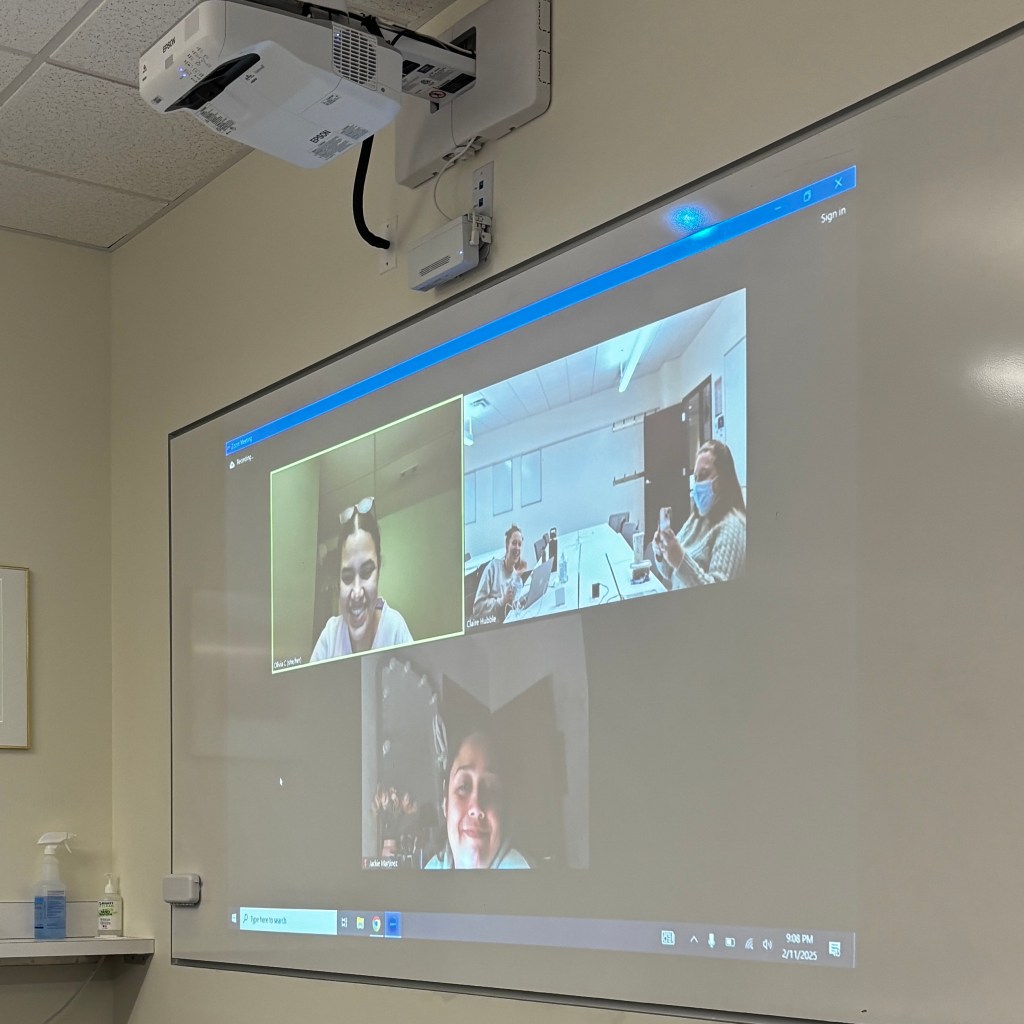
For the second week of holding this study space, I was joined by some of my fellow ISSA Officers. Fortunately for me, every current ISSA officer identifies as a woman. I feel so lucky that I get to share leadership responsibilities with other girls and that these are the women that I can one day call colleagues! They are bright and passionate and empathetic and strong. Tonight’s co-working session was attended by only women, which got me thinking about the impact of our gender on the field of library science.
What if women ruled the world?
In mine, they do. Discussing feminism within library science always instills immense anger within me. If I have worked with a majority of women in library jobs I’ve held, why have most of my library directors been men? (Literally all of them, with the exception of the amazing Daniela Martinez at Maywood Public Library District. But again, when I started that job in April 2024, a man was leading the organization.) Why is there such a difference between the percentage of male librarians and the number of male directors?
Further: if women dominate this profession, why are we still paid less than men librarians? Data USA, using 2017 US Census information, does a great job of visualizing the gender discrepancies in our field and the overview at the top lists two separate annual salaries. Guess whose is the smaller amount? Throughout the rest of this dashboard, users can also find other helpful demographic information, such as (in 2017) 85.9% of librarians (men and women) were white.
Now, I’ve worked in a very diverse array of libraries: research centers, public libraries, academic libraries on college campuses. The majority of library workers in the institutions I’ve worked in that are not librarians with MLIS degrees are women of color. Of the folks I’ve worked with, they have been such valuable additions to their communities and workplaces. But reading labor data like from the site linked above makes it so obvious that their workplaces do not appreciate them, nor want to seem them grow at all. If our library institutions truly believed in diversity, equity, and inclusion, there would be more Black, brown, and Native librarians.
This is where my anger can be turned into action, though. Here are things I know from my job experience:
- White women dominate librarian/MLIS positions.
- Library workers of color need more educational and developmental advancement in order to become MLIS-holding librarians.
- No woman librarian or library worker is paid as much as their male counterparts.
The action seems obvious: use every ounce of power I get once I’m in a Librarian position to encourage the advancement of library workers of color, especially women. Once we have a more racially and ethnically diverse group of women in librarian positions–full-time, insured, Masters-degree positions–we will be able to influence way more people–admin, governments, the public–into understanding that when diverse women rule the world, it is a better place.


One response
Claire Hubble, you make me proud of the way you can express your concerns that are shared by many but spoken by few! Your points are well taken and need to be addressed. The is not an unusual phenomenon – women being the bulk of the group that makes up a job core, but men being the head of the groups and consequently, paid more! Teaching and administrative positions come to mind immediately, as that is one I am most familiar with. Probably owned businesses would fall into this category also but my experience and knowledge there is pretty limited. Thanks for taking a leadership role. I hope that valuable experience will be rewarded for you in the future!
LikeLike